
The Future of Millets in Global Food Security: A Climate-Smart Revolution
By: Dr. Anya Sharma, Agricultural Economist | October 28, 2025
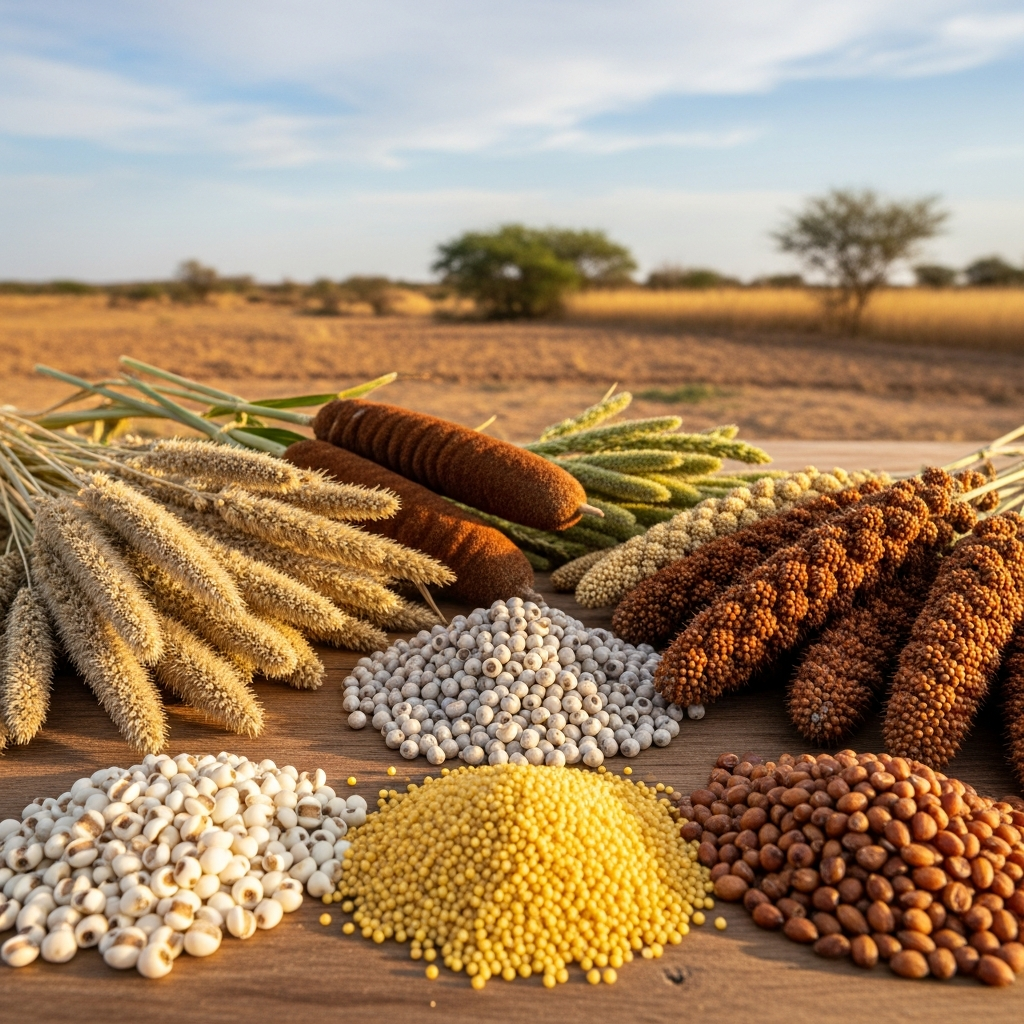
The global food system is at a critical juncture. Faced with the twin challenges of a rapidly growing population and the accelerating impacts of climate change, the reliance on a narrow base of staple crops primarily rice, wheat, and maize represents a significant fragility. This monoculture approach has led to resource depletion, reduced biodiversity, and exposed billions to volatility in production caused by extreme weather events. In this precarious landscape, an ancient grain, long relegated to the margins, is poised for a dramatic comeback: the millet. Millets, a group of small-seeded grasses, including pearl millet, finger millet, foxtail millet, and proso millet, are not merely 'forgotten foods'; they are a climate-smart solution with the potential to revolutionize global food security, offering a pathway toward nutritional resilience, ecological sustainability, and economic upliftment for vulnerable communities.
The international spotlight on millets, notably through the declaration of the International Year of Millets, marks a collective recognition of their untapped potential. This essay delves deep into the multifaceted role millets must play in the coming decades, exploring their nutritional superiority, remarkable environmental adaptability, the challenges they face in modernization, and the necessary policy frameworks required to transition them from a traditional subsistence crop to a global dietary staple. Achieving food security in the 21st century requires not just more food, but better food food that thrives in adversity and nourishes comprehensively. Millets fit this bill perfectly, presenting a viable, scalable blueprint for a resilient global food future.
1. The Nutritional Powerhouse: Beyond Calories
In an era where hidden hunger deficiencies in essential micronutrients affects billions, the nutritional profile of millets provides a compelling argument for their adoption. Unlike refined white rice or highly processed wheat flour, millets are dense in vitamins, minerals, and dietary fiber. Finger millet (ragi), for example, is perhaps the richest source of calcium among all food grains, containing up to 30 times more calcium than rice. Similarly, pearl millet (bajra) is packed with iron and zinc, critical minerals whose deficiency leads to widespread anaemia and stunted growth, particularly in developing nations. Integrating millets into school feeding programs and public distribution systems could directly combat these nutritional deficits more effectively than fortifying current staples. The slow-release carbohydrates in millets also translate to a low glycemic index, making them invaluable in the global fight against Type 2 diabetes, a lifestyle disease rapidly escalating across the world. Their high fiber content aids digestion, promotes gut health, and helps in managing obesity, offering a holistic approach to nutritional security that moves beyond simple caloric sufficiency.
Furthermore, millets are naturally gluten-free, a crucial feature in a world with rising incidences of celiac disease and gluten intolerance. This characteristic positions them as a key ingredient in diversified and specialized food markets in affluent countries. The amino acid profile of millets is also superior to many conventional cereals, providing a more balanced protein source, which is especially important for vegetarian and vegan populations. The minor millets, such as little millet and kodo millet, often possess higher levels of antioxidants than mainstream grains, suggesting roles in preventing chronic degenerative diseases. This comprehensive nutritional package underscores that the push for millets is fundamentally a push for improved public health outcomes, making the argument for their inclusion in global agricultural policy deeply rooted in human welfare. The focus on quantity must shift to quality, and millets deliver on that quality metric with exceptional results.
2. Ecological Resilience: The Climate-Smart Advantage
Perhaps the most powerful argument for millets lies in their environmental resilience, a non-negotiable trait for future agriculture in a climate-volatile world. Millets are true C4 crops, meaning they possess a highly efficient photosynthetic pathway that allows them to thrive in high temperatures and harsh sunlight. Crucially, they require significantly less water than rice or even wheat. For instance, pearl millet can often grow purely on residual soil moisture, demanding only a fraction of the water needed by paddy fields, which are major contributors to global methane emissions. This drought-tolerance makes millets a lifeline for farmers in arid and semi-arid regions (ASARs) who are already grappling with erratic rainfall and prolonged dry spells. As global freshwater resources become increasingly scarce and unpredictable, cultivating crops that demand minimal irrigation is a strategic necessity for national food security planning.
Millets are also inherently low-input crops. They flourish in marginal soils with poor fertility, rarely requiring the massive application of synthetic fertilizers or pesticides that characterize modern industrial agriculture. This not only reduces input costs for farmers but also minimizes the environmental pollution associated with nutrient runoff and chemical residue. Their deep, fibrous root systems help in soil conservation, improving soil structure, preventing erosion, and enhancing carbon sequestration, contributing positively to mitigating climate change. Unlike rice, which is often grown in waterlogged conditions conducive to methane production, millets leave a minimal carbon footprint. Promoting millet cultivation is therefore synonymous with promoting regenerative agriculture and reversing the environmental damage caused by the intensive cultivation of water-guzzling and nutrient-intensive staples. By shifting cultivation patterns towards millets, nations can secure food supply while simultaneously protecting their most vital natural resources: water and soil.
3. Socio-Economic Empowerment and Local Value Chains
The cultivation of millets is inextricably linked to the socio-economic fabric of smallholder farmers and indigenous communities, particularly women, across Africa and Asia. Millets are often grown by smallholder farmers who rely on traditional knowledge passed down through generations. Supporting millets means supporting these local, decentralized food systems. Since millets have a shorter cultivation cycle compared to rice or wheat, they offer farmers greater flexibility, enabling them to fit better into complex, diversified cropping systems and providing a crucial buffer against crop failure. A shorter growing season also allows for double or triple cropping, thereby maximizing output from marginal land and significantly boosting farm income stability.
Furthermore, millets are often a woman’s crop. Women play a predominant role in the cultivation, harvesting, post-harvest processing, and storage of millets, especially in rain-fed regions. Promoting millet production and consumption translates directly into empowering rural women economically, providing them with greater control over household income and improving their standing within the community. Revitalizing local processing industries such as small-scale de-hulling and milling units can create jobs and establish local value chains, preventing the income and nutritional value from being extracted by large-scale commercial entities. However, this requires dedicated investment in appropriate technology; the hardness of the millet grain currently makes household processing laborious and time consuming, a major factor that discourages consumption and marketing. The transition from traditional pounding to mechanized, decentralized processing is a key step in realizing the economic potential of this crop and ensuring that the financial benefits accrue directly to the producing communities.
4. Modernization, Market Access, and Consumer Perception
Despite their clear advantages, millets face considerable hurdles in achieving mainstream global status. Historically, in many cultures, millets have been associated with poverty, subsistence farming, and a lack of modernity a 'poor man's crop.' Overcoming this entrenched negative consumer perception is a major non-scientific challenge. The preference for polished white rice and soft wheat bread, often driven by marketing and ease of cooking, has contributed to millets' decline. A massive global effort is needed to rebrand millets as 'nutri-cereals' and 'superfoods,' focusing on their health benefits and versatility in modern cuisine. This requires aggressive marketing campaigns and product development initiatives that integrate millets into familiar foods like bread, pasta, breakfast cereals, and even beer.
The supply chain infrastructure also poses significant challenges. The cultivation of millets is often fragmented, leading to inconsistent supply and quality, which hinders large-scale industrial processing. Post-harvest, millets require specialized handling. The primary challenge is de-hulling, or removing the tough, indigestible outer layer. Current industrial de-hullers are often inefficient or too expensive for small processors. Investment in R&D is necessary to develop affordable, robust, and small-scale processing technologies that can maintain the nutritional integrity of the grain while making it easy for consumers to prepare. Furthermore, linking fragmented smallholder production to formal markets requires robust aggregation systems, quality standardization protocols, and efficient storage facilities to prevent post-harvest losses, which can be substantial in tropical climates. Addressing these gaps in the value chain from farm to fork is essential to ensuring millets are a consistent, high-quality, and readily available option for consumers worldwide, moving them beyond specialty stores into everyday grocery aisles.
The establishment of guaranteed minimum support prices (MSPs) and procurement systems for millets, similar to those for wheat and rice, is crucial for incentivizing farmers. Without market assurances, farmers will continue to prioritize the subsidized staple crops, perpetuating the status quo. Policy must bridge the risk gap for farmers, providing them with the confidence to transition to climate-resilient millet farming. This necessitates a fundamental shift in agricultural budgets and subsidies, moving away from heavily favoring water-intensive crops towards rewarding ecological sustainability and nutritional output.
5. The Role of Policy, Research, and Global Cooperation
The resurgence of millets cannot be left to market forces alone; it requires deliberate policy intervention and global scientific cooperation. The United Nations General Assembly's proclamation of the International Year of Millets (IYM) 2023 was a landmark step, but the momentum must be sustained. Governments must integrate millets into their national food and nutritional security strategies, prioritizing public funding for millet research. This research should focus on developing high yielding, climate-resilient, and nutrient-enhanced millet varieties using modern breeding techniques (but respecting the diversity of local landraces). Specifically, research into improving iron and zinc bioavailability and creating varieties with enhanced baking qualities is needed to boost consumer acceptance.
Furthermore, public procurement and distribution systems must be retooled. Mandating the inclusion of a certain percentage of millets in government welfare schemes, school meals, and military rations can create a predictable, large-scale demand, which in turn drives production. Tax incentives for the private sector to develop millet-based products and processing machinery would accelerate innovation. International organizations, including the FAO, IFAD, and CGIAR centers, must intensify cross-border collaboration to share best practices in cultivation, processing, and marketing, particularly between major millet growing regions like India and the Sahel in Africa. Knowledge transfer regarding successful drought-management techniques and pest resistance strategies is paramount. Global coordination will also ensure the preservation of millet genetic diversity, safeguarding the seeds' adaptation potential against future climatic shocks. This coordinated approach from the field to the table is the only way to solidify millets' place as a foundation of global food security.
Education and awareness are equally vital policy instruments. Nutritional education programs must highlight the health benefits of millets, targeting consumers, health professionals, and policymakers alike. The narrative around millets must change from 'poor man's food' to 'superfood for a sustainable future.' Subsidies for water and electricity used in agriculture often encourage the cultivation of unsustainable crops; redirecting these subsidies towards inputs for millet cultivation, such as better quality seeds and post-harvest technology, would create an effective incentive structure aligned with climate goals. Ultimately, policy must serve as the catalyst that transforms a traditional, localized solution into a globally adopted staple, one that is equitable, nutritious, and environmentally sound.
Conclusion: Sowing the Seeds of Resilience
The future of global food security hinges on our ability to embrace diversity and resilience. The over-reliance on a few water- and nutrient-intensive staple crops is a model nearing its breaking point. Millets offer a powerful and proven alternative. They represent a comprehensive solution to intertwined global crises: providing superior nutrition to combat hidden hunger, offering unparalleled resilience against climate change-induced drought and heat, and fostering socio-economic growth for the most vulnerable farming communities. Their transition from a crop of regional subsistence to a global staple is not a matter of 'if,' but 'when' and 'how quickly.'
To secure this future, we must move beyond symbolic gestures. It requires concerted, sustained investment in research, infrastructure, and policy reform. The private sector must innovate new products, governments must create stable market demand through procurement, and consumers must be educated to embrace these ancient grains as the food of tomorrow. By sowing the seeds of millets, we are, in essence, sowing the seeds of a more resilient, healthier, and sustainable food system for generations to come. The revolution is quiet, grown in the hard earth of marginal lands, but its impact will be loud and global, securing our plates against the volatility of the coming climatic era. The humble millet is ready to feed the world.