
The Golden Age of Spices: Navigating Quality and Traceability
By: Chef Marco Rossi, Culinary Consultant | May 28, 2025
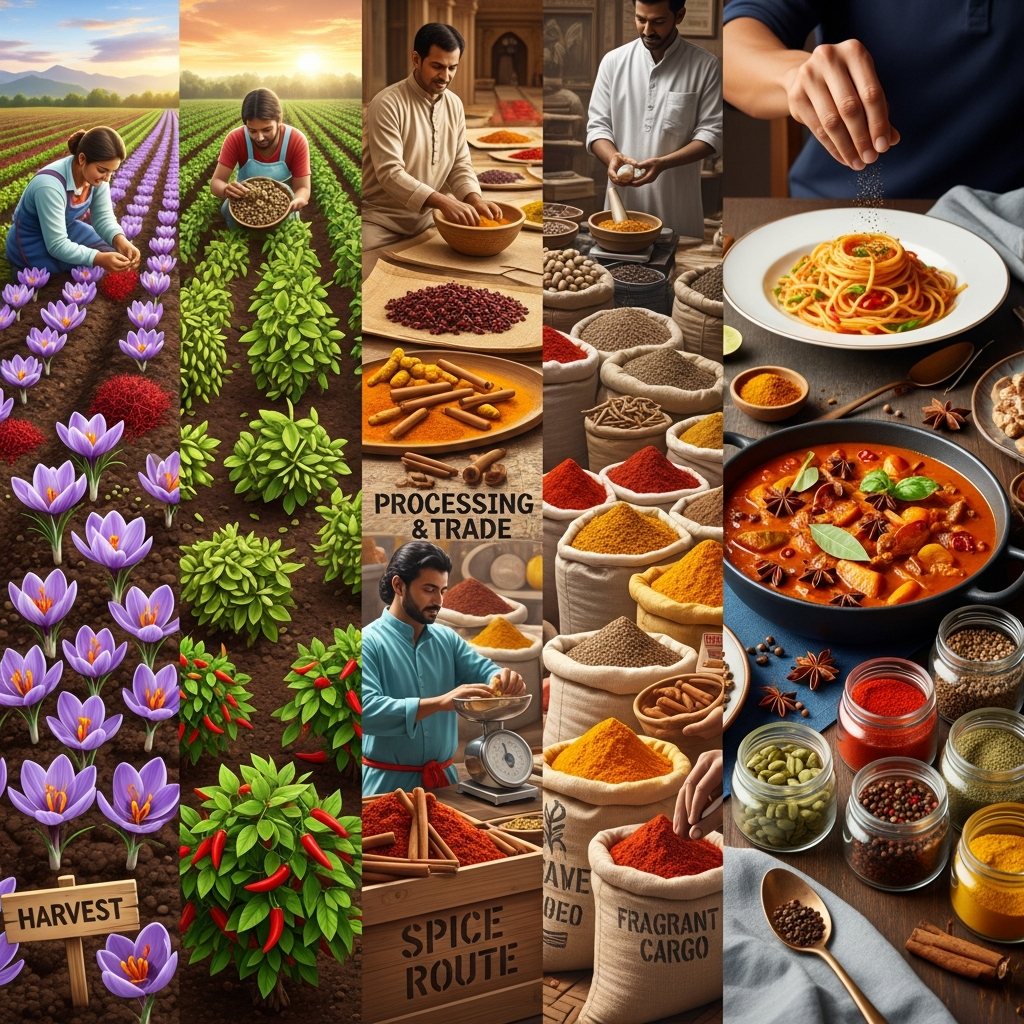
From the ancient incense routes of Arabia to the vast maritime networks of the Dutch East India Company, spices have always been more than mere ingredients. They are commodities soaked in history, symbols of wealth, and catalysts for global exploration. We live in a new "Golden Age of Spices," one characterized not by colonial conquest, but by unparalleled access and demand. However, this accessibility comes with a significant challenge: how do consumers and businesses ensure the quality, purity, and ethical sourcing of these precious powders and pods? The answer lies in a single, critical concept: traceability.
The global spice market is a labyrinthine structure, highly fragmented and geographically dispersed. Turmeric from India, vanilla from Madagascar, saffron from Iran, and black pepper from Vietnam all navigate complex supply chains before reaching our kitchen shelves. This complexity creates vast opportunities for adulteration, mislabeling, and unethical labor practices. This deep dive will explore the inherent risks in the modern spice trade and outline the technological and systemic solutions being deployed to bring transparency and trust back to the golden commodity.
1. The Silent Threat to Purity
Adulteration the act of adding inferior, cheaper, or non-spice material to bulk up the product is a perennial problem in the spice trade. Historically, ground pepper was bulked up with ground olive pits. Today, the methods are more sophisticated and, in some cases, alarmingly dangerous. For example, low-grade paprika and chili powders have been found contaminated with Sudan dyes, illegal colorants linked to cancer. Furthermore, saffron, the world’s most expensive spice by weight, is frequently mixed with dried flower stamens or even dyed corn silk.
The economic incentive for fraud is enormous, directly proportional to the price of the spice. The sheer volume of global trade makes physical inspection of every batch impossible. This is further complicated by the fact that many spices are purchased in their whole form but ground closer to the consumer, offering multiple points of failure. The challenge, therefore, shifts from simply detecting fraud to preventing it by demanding authenticated origins.
A key component of this risk is the blending of different spice grades or geographical origins. While not always a health hazard, selling a lower-grade, mass-produced cinnamon under the guise of rare, high-quality Ceylon cinnamon is an economic fraud that erodes consumer trust and harms legitimate, premium producers who invest heavily in superior cultivation practices.
2. Beyond Aroma: The Science of Spice Quality
For the consumer, quality is often judged by flavor and aroma. For the industry, quality is a measure of chemical composition, volatile oil content, and microbial safety. A high-quality spice must meet several criteria:
- Volatile Oil Content: The concentration of essential oils responsible for flavor and aroma. High-quality cloves, for instance, have a very high eugenol content.
- Color Value: Important for spices like turmeric and paprika. Color measurement ensures consistency and prevents the use of artificial colorants.
- Moisture Content: Crucial for shelf life and preventing mold growth. Excessive moisture leads to caking and microbial contamination.
- Absence of Contaminants: This includes heavy metals, pesticide residues, and mycotoxins (like Aflatoxin). These contaminants are often invisible and pose serious health risks.
Analytical techniques like High-Performance Liquid Chromatography (HPLC) and Gas Chromatography-Mass Spectrometry (GC-MS) are indispensable tools used to map the chemical fingerprint of a spice. However, these tests are expensive and time-consuming, meaning they are typically applied only to samples, not the entire shipment. This limitation is why robust upstream traceability is the superior defense.
3. Traceability: The Blueprint for Trust
Traceability is not just about knowing where a product came from; it's about documenting and verifying every step of its journey, from the specific farm plot (the "micro-origin") to the final packaging facility. In the context of spices, this means linking a batch of product to the farmer who harvested it, the date of harvest, the drying method used, the processor who cleaned and stored it, and the exporter.
The demand for traceability is driven by three main forces: Consumer Consciousness, Regulatory Mandates, and Supply Chain Resilience.
Consumer Consciousness: Modern consumers, particularly in developed economies, are increasingly prioritizing ethical sourcing and environmental sustainability. They want to know the "story" of their food, including whether the farmers received fair compensation. Traceability is the only way to validate claims like 'Fair Trade' or 'Organic.'
Regulatory Mandates: Governments worldwide are strengthening food safety laws. The FDA's Food Safety Modernization Act (FSMA) in the US, for example, requires sophisticated record-keeping that enables rapid tracking of contaminated food items back to their source, demanding a level of supply chain visibility that was unimaginable a decade ago.
Supply Chain Resilience: A robust traceability system allows a buyer to quickly isolate a contamination issue or a geopolitical disruption, minimizing the impact on the rest of the supply chain. When a shipment is rejected due to contamination, traceability allows the buyer to pinpoint the source and immediately switch to a different, verified supplier, enhancing business continuity.
4. The Digital Revolution: Blockchain and QR Codes
The complexity of the spice supply chain is finally being met with robust technological solutions. Two technologies are leading the charge in creating immutable, verifiable records:
Blockchain Technology
Blockchain offers a decentralized, tamper-proof ledger to record transactions and quality checks. In a pilot program for Sri Lankan cinnamon, when a farmer harvests the spice, the data (location, weight, date) is logged onto the blockchain. As the batch moves through the drying facility, the grinding mill, and the exporter, each transaction is timestamped and recorded. This creates an end-to-end, unalterable history that any authorized party from the importing customs official to the final retailer can audit.
Digital QR Codes and NFC Tags
The physical manifestation of digital traceability is the unique identifier, often a QR code or an NFC tag. When a consumer scans the code on a jar of vanilla extract, they can be immediately directed to a web portal showing: the region of cultivation (e.g., Sava region, Madagascar), the cooperative that processed it, a picture of the farmer, and a summary of the quality certifications. This immediate, transparent connection is the ultimate tool for consumer engagement and trust-building.
While technology is a powerful enabler, it only works if the data being entered is accurate. This necessitates human and systemic improvements at the source the farmer level requiring investment in training, clear Standard Operating Procedures (SOPs), and quality assurance checks across all participating entities.
5. The Smallholder Dilemma: Making Traceability Inclusive
The vast majority of the world's spices are grown by smallholder farmers operating on plots of land often smaller than two hectares. These farmers often lack access to capital, modern drying and storage facilities, and training on advanced quality standards. Imposing strict traceability requirements can inadvertently exclude these essential growers, pushing them further into informal, less regulated markets.
A successful, ethical traceability model must be inclusive. Large buyers must invest in the infrastructure of the producing countries. This involves:
- Training and Extension Services: Educating farmers on best practices for harvesting, drying (e.g., raised drying beds to prevent contact with the ground), and early disease detection.
- Shared Infrastructure: Funding and creating community-based cleaning, drying, and storage centers, which act as initial, controlled points of aggregation and quality checking.
- Financial Incentives: Paying a premium for documented, traceable, and high-quality spices, thereby linking quality directly to the farmer's income.
This collaborative approach transforms traceability from a burdensome compliance requirement into an economic development tool, creating resilient supply chains that benefit everyone, from the farm to the fork.
Conclusion: The Future is Transparent
The Golden Age of Spices continues, but its defining characteristic is no longer exotic rarity; it is verifiable authenticity. The market is shifting from a price-driven commodity trade to a value-driven ecosystem where quality, ethics, and transparency command a premium. For brands, embracing traceability is no longer optional it is a competitive necessity and a moral obligation. For consumers, the power lies in demanding this information, using technology like QR codes to interact with the story of their food, and rewarding the companies that have built genuinely transparent supply chains. The future of the spice trade is one where every pinch of cinnamon and dash of nutmeg is a testament not just to flavor, but to a verifiable journey of purity and equity.