
Logistics Innovation: Reducing Transit Time for Fragile Goods
By: Pranav Pipaliya, Founder of Nirbhay Global Trading Company | January 5, 2025
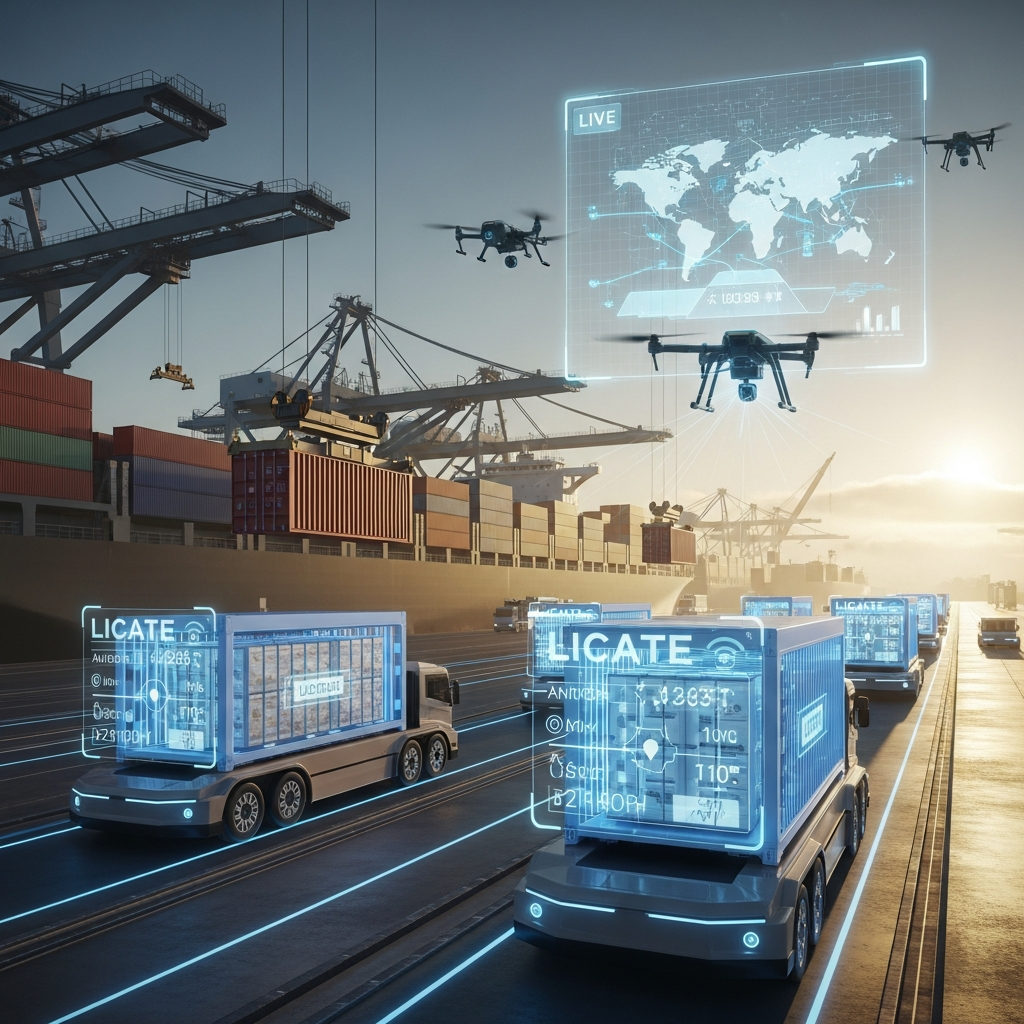
In the hyper-accelerated world of global commerce, the speed of delivery is often the primary metric of success. However, when dealing with fragile goods whether they are high-value electronics, medical samples, rare artifacts, or perishable fine foods speed can be a paradox. The very act of accelerating transit introduces kinetic energy, increasing the risk of shock, vibration, and damage. True innovation in logistics for delicate cargo lies not just in making the journey faster, but in redefining how that journey is managed to ensure safety and speed are symbiotic, not mutually exclusive. This requires a shift from traditional, linear transport models to an integrated, data-driven, and highly specialized approach.
1. The Calculus of Fragility and Speed: Understanding the Trade-off
Before diving into solutions, we must fully grasp the catastrophic implications of transit damage. For high-tech manufacturers, a damaged component can halt an entire production line, incurring millions in downtime. For pharmaceutical companies, a single broken vial of a temperature-sensitive vaccine means not just lost revenue, but lost human impact. The trade-off is often framed as "faster means riskier," forcing logistics providers into slow, overly cautious routes. The goal of modern innovation is to mathematically eliminate this trade-off by quantifying risk in real-time. This quantification relies heavily on advanced sensor technology embedded within the supply chain, moving us away from reactive post-mortem analysis to predictive risk mitigation.
Transit time reduction, therefore, must be approached holistically, focusing on eliminating non-value-added time (dwell time, customs delays, handling steps) rather than increasing vehicle velocity on the road or in the air. Time spent waiting in a loading dock is time the fragile cargo is static, but time spent being loaded incorrectly is time it is at maximum risk. By streamlining the interfaces between different transport modes air cargo to truck, truck to distribution center we can gain back hours without increasing kinetic exposure.
2. Sensor Driven Smart Packaging and IoT Integration
The package itself is the first, and most critical, line of defense. Gone are the days of generic bubble wrap. Today, packaging innovation focuses on intelligent, adaptive containment.
2.1. Dynamic Cushioning and Material Science
New materials offer vastly superior performance. Custom foam-in-place solutions, molded polymers, and biodegradable air-bag systems are engineered specifically for the item's mass, fragility curve, and unique shock tolerance (the G-force threshold it can withstand). Furthermore, researchers are exploring metamorphic materials that can stiffen or soften based on external temperature or pressure signals, offering an unparalleled level of adaptive protection within the container. This bespoke approach minimizes package volume and weight, contributing to faster handling and lower fuel consumption, which in turn aids transit time reduction.
2.2. The Digital Guardian: The Internet of Things (IoT)
The true game-changer is the integration of IoT sensors. These miniaturized, low-power devices track every variable: acceleration (shock), pitch and roll (vibration), temperature, humidity, and pressure. This data is not just stored; it is transmitted in real time via low-power wide-area networks (LPWAN) like Narrowband IoT (NB-IoT) or LoRaWAN.
Crucially, this data allows for immediate intervention. If a shock event exceeds 80% of the cargo’s G-force limit, an alert is instantly sent to the logistics manager and the driver, prompting a change in handling procedure or rerouting the shipment to a dedicated 'High Priority Intervention' depot. By mitigating the damage the moment the risk arises, we prevent the delays associated with damaged goods inspection and replacement orders, thus drastically shortening the effective transit time.
3. AI-Driven Dynamic Routing and Predictive Analytics
Speed is a function of optimized distance and time, but for fragile goods, it's also a function of surface quality and environmental stability. AI excels at analyzing millions of data points—historical traffic, weather patterns, road construction, and even recent sensor data from other trucks on the same route (pothole detection) to generate a "smoothness score" for every road segment.
The AI routing engine for fragile goods doesn't just calculate the shortest path in terms of miles or time; it calculates the "Optimal Risk-Adjusted Time (ORAT)." The ORAT might favor a slightly longer, smoother highway route that saves ten minutes in handling delays later, or prevents a shock event that would necessitate a three-hour inspection stop. This is dynamic routing at its most sophisticated: the route changes in real-time, minute-by-minute, based on immediate operational variables and safety thresholds. Furthermore, AI can use machine learning to predict customs bottlenecks and strategically schedule arrivals to minimize airport or seaport dwell time, turning days of waiting into hours of smooth processing.
4. Automated, Low-Contact Handling Systems
The most dangerous moments for any fragile item are during human-led transitions loading, unloading, and sorting. The future of fragile goods logistics is minimizing human contact through automation.
4.1. Precision Robotics in Sorting Centers
Robotic arms equipped with advanced vision systems and soft-grip manipulators are replacing traditional conveyors and chutes. These robots can recognize the fragility rating and optimal gripping points of a package and place it gently onto the next stage of transport. These systems operate with millimeter precision, entirely eliminating the drops, shoves, and misalignments common in high-volume manual sorting environments. By automating this process, the time needed for sorting is drastically reduced, ensuring faster transfer times, especially in high-volume, cross-docking operations.
4.2. Automated Guided Vehicles (AGVs) and Drones
Within fulfillment centers and airports, Automated Guided Vehicles (AGVs) and specialized pallet-moving drones take over the internal transport of sensitive containers. AGVs follow pre-programmed, shock-mitigated paths and maintain a constant, measured speed, unlike human-operated forklifts which are subject to abrupt stops and acceleration. For high-value, light-weight, and extremely fragile items (such as donor organs or time critical medical supplies), specialized drones offer point-to-point delivery over short distances, bypassing ground traffic entirely. This is the ultimate transit time reducer for the crucial "last-mile" or "middle-mile" segment, effectively replacing hours with minutes.
5. Transparency and Traceability through Digital Twin Technology
A "Digital Twin" of the fragile shipment is created a virtual replica that exists in the cloud. This twin is continuously updated with real-time data from the IoT sensors and the routing engine. Stakeholders, from the shipper to the recipient, can observe the twin’s status, predicted time of arrival, and, most importantly, its current "health score."
If the Digital Twin shows the package has been exposed to unauthorized temperature fluctuations, the recipient knows immediately and can prepare contingency plans. If a transit delay is predicted, the AI can automatically trigger a shift to a faster transport mode (e.g., from ground to overnight air freight) if the remaining transit time exceeds the product’s time-to-delivery threshold. This unprecedented level of transparency and real-time decision-making minimizes anxiety and, crucially, minimizes the delays caused by uncertainty or manual check-ins.
6. Blockchain and Immutable Data Records
Reducing transit time isn't just about movement; it's about minimizing the time spent resolving disputes, confirming provenance, and completing documentation. Blockchain technology provides a decentralized, immutable ledger for all handling events, sensor readings, and ownership transfers associated with the fragile good.
When a fragile item changes hands from the manufacturer to the first-mile carrier, through customs, and to the final recipient—that event is logged instantly and permanently on the blockchain. This record includes the handler’s identity, the time, and the sensor readings at that exact moment. This eliminates the need for time-consuming physical paperwork, speeds up customs clearance (as data integrity is guaranteed), and provides an undeniable record of where and when any damage occurred, simplifying insurance claims and reducing the administrative delays that often plague fragile goods logistics. This trust layer allows for faster, "green-lane" processing at critical checkpoints, directly leading to lower transit times.
The confluence of these technological pillars smart, sensor-enabled packaging, AI optimized low-vibration routing, automated handling, and a secure, transparent digital ledger is what defines modern logistics innovation for fragile cargo. We are no longer simply moving boxes faster; we are managing the kinetic, thermal, and temporal exposure of high-value assets with surgical precision. The result is a reduced transit time that is achieved not at the expense of safety, but because of its enhanced security. The future of fragile goods logistics is fast, safe, and above all, intelligent. The companies that adopt this integrated model will not only reduce their operational costs and transit times but will establish a new gold standard for reliability in the global supply chain.