
Soy vs. Paraffin vs. Beeswax: Which is Right for Your Brand?
By: By Abhijith Narayana, Chemical Expert | June 24, 2025
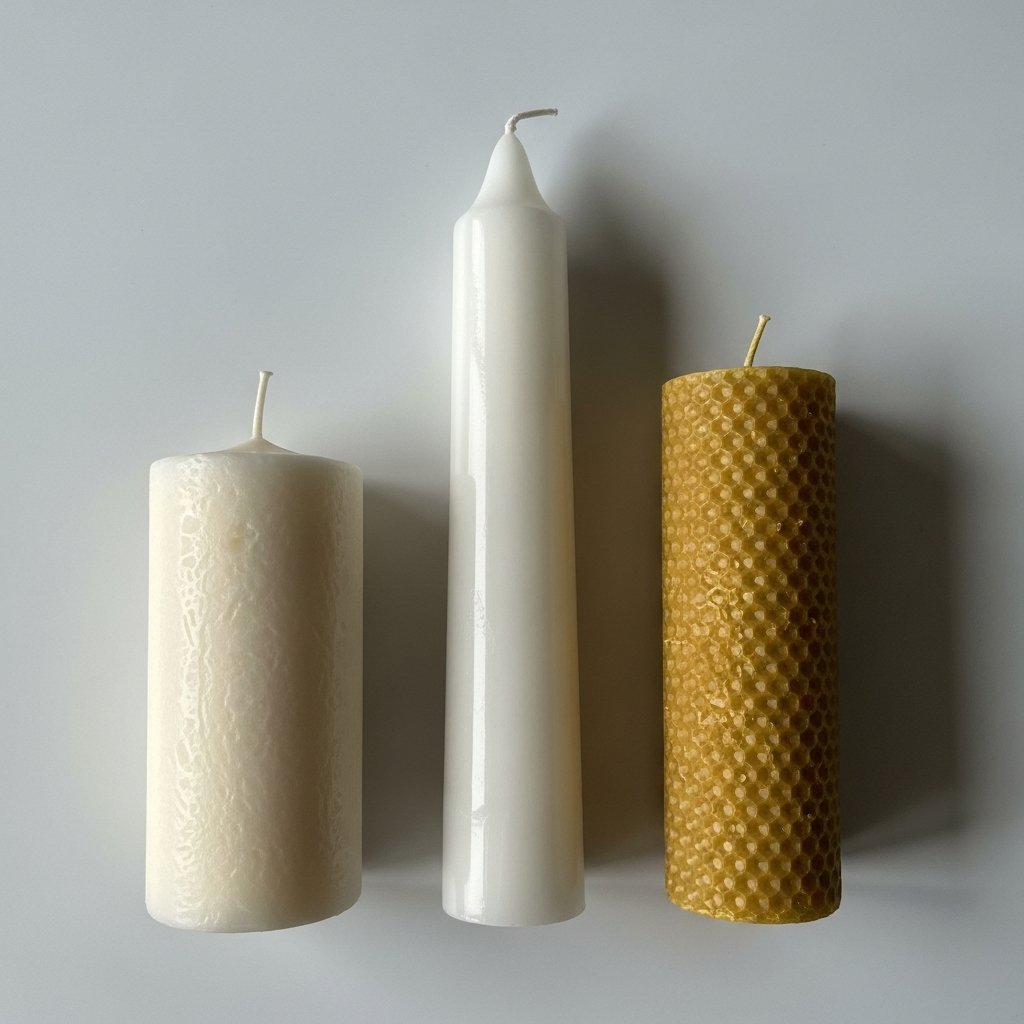
In the expansive and competitive world of home fragrance, the decision of which wax to utilize is not merely a manufacturing detail; it is the very foundation of your brand's identity. For international buyers, retailers, and private label developers, navigating the technical and marketing differences between Soy, Paraffin, and Beeswax is crucial. This choice dictates the burning performance of your product, its scent throw capabilities, its aesthetic appeal, and perhaps most importantly, how your brand is perceived by the end consumer. As the market shifts towards transparency and sustainability, while simultaneously demanding high performance, understanding the distinct personality of each wax type is the key to removing confusion and making a profitable, brand-aligned decision.
This comprehensive guide aims to dissect the three primary contenders in the candle industry: Paraffin, Soy, and Beeswax. We will move beyond the surface-level marketing jargon to explore the functional realities of each material. We will examine them through the lenses of scent diffusion, eco-friendliness, cost implications, and visual finish. By the end of this analysis, you will possess the clarity needed to select the medium that not only holds your wick but upholds your brand’s promise to your customers.
1. Paraffin Wax: The Industry Titan
For over a century, Paraffin wax has been the dominant force in the candle manufacturing sector. Derived from the refining process of crude oil, it is a byproduct of the petroleum industry. While this origin story has drawn criticism in recent years due to environmental concerns, it is essential for a buyer to understand why Paraffin remains the gold standard for many luxury and mass-market brands alike: performance consistency.
The primary advantage of Paraffin wax lies in its molecular structure, which allows it to hold a significant amount of fragrance oil and, crucially, to release that fragrance effectively. This capability is referred to in the industry as "scent throw." Paraffin excels at both "cold throw" (the scent released when the candle is unlit) and "hot throw" (the scent released while burning). If your brand’s primary value proposition is a powerful, room-filling aroma that hits the consumer immediately upon opening the box, Paraffin is often the most reliable vehicle to achieve that intense sensory experience.
From an aesthetic perspective, Paraffin offers a versatility that natural waxes often struggle to match. It can be refined to varying melting points, allowing for the creation of rigid pillars, intricate carved candles, and tapers that hold their shape under stress. It accepts dyes vividly, resulting in deep, saturated colors without the pastel muting effect seen in vegetable waxes. Furthermore, Paraffin cools to a smooth, flawless finish, often requiring less "top pouring" or heat gun treatment during manufacturing to achieve a shelf-ready look.
Buyer's Note on Paraffin
Do not dismiss Paraffin solely based on "natural" trends. Many high-end luxury brands continue to use high-quality, food-grade Paraffin blends because it offers the most reliable scent projection. If your market is driven by fragrance intensity and flawless visual presentation, a refined Paraffin blend remains a top contender.
However, the drawbacks of Paraffin are significant in the modern marketplace. Being a petroleum product, it is non-renewable and is often criticized for releasing soot and trace amounts of volatile organic compounds (VOCs) when burned, although high-quality refined Paraffin burns much cleaner than its reputation suggests. Nevertheless, for a brand targeting the "wellness," "green," or "non-toxic" demographic, the petroleum association alone can be a deal-breaker, regardless of the scientific nuance.
2. Soy Wax: The Eco-Friendly Challenger
Soy wax entered the market as a direct response to the environmental concerns associated with petroleum-based waxes. Created from the hydrogenation of soybean oil, it is a vegetable-based, fully renewable resource. Over the last two decades, Soy has transitioned from a niche alternative to a massive market force, particularly in the mid-range and "masstige" (prestige for the masses) sectors.
The defining characteristic of Soy wax is its clean burning profile. Unlike Paraffin, Soy wax produces negligible amounts of petrol-carbon soot. This results in a cleaner vessel and cleaner air in the consumer's home, a selling point that resonates deeply with health-conscious buyers. Furthermore, Soy wax has a lower melting point than Paraffin. This lower temperature means the wax burns slower, often resulting in a candle that lasts 30% to 50% longer than a paraffin equivalent of the same size. For a buyer, this is a powerful value proposition: you are selling a product that offers more burn hours for the price.
Visually, Soy wax has a distinct personality. It tends to be opaque, creamy, and matte. It does not have the glossy shine of Paraffin; instead, it offers a soft, pastel-like appearance that consumers have come to associate with "natural" luxury. However, working with Soy requires patience and technical skill. It is prone to "frosting" (white crystalline patterns forming on the side of the glass) and rough tops after burning. While many consumers accept these quirks as proof of natural origin, a brand seeking perfection must be prepared for these cosmetic inconsistencies.
regarding fragrance, Soy wax is often described as having a cleaner scent throw, though it is typically more subtle than Paraffin. Because the wax is denser on a molecular level, it requires more heat to release the fragrance oil. This often results in a "softer" scent that fills a room gradually rather than aggressively. While it may not deliver the immediate punch of a Paraffin candle, the scent profile is often perceived as more authentic and less chemical.
Buyer's Note on Sourcing
When sourcing Soy wax, be aware of the "100% Soy" claim. Pure soy wax is very soft and can be difficult to ship in hot climates as it may melt or sweat. Many manufacturers use a "Soy Blend" (mixing in a small amount of Paraffin or other vegetable waxes) to stabilize the candle for international shipping while maintaining the marketing appeal of soy.
3. Beeswax: The Ancient Luxury
Before the petroleum industry and before industrial agriculture, there was Beeswax. It is the oldest known fuel for candles and arguably the most prestigious. Beeswax is a completely natural byproduct of the honey making process, secreted by bees to build their honeycombs. It is the only wax that exists in its native state without requiring chemical processing or hydrogenation.
The primary appeal of Beeswax lies in its purity and its unique interaction with the environment. When burned, Beeswax is said to release negative ions, which attach to positive ions (such as dust, pollen, and mold) in the air, neutralizing them and causing them to fall to the ground. This air purifying quality makes Beeswax the premier choice for brands targeting allergy sufferers, asthmatics, or the ultra-wellness sector. It is the cleanest burning wax available, producing virtually no smoke or soot.
From a burning perspective, Beeswax is incredibly dense and has a very high melting point. This results in a significantly longer burn time than even Soy wax. However, this hardness also creates technical challenges. It requires a thicker, more robust wick to generate enough heat to melt the wax pool. If the wicking is incorrect, Beeswax candles are prone to "tunneling" (burning straight down the center leaving wax on the sides).
The scent profile of Beeswax is complex. In its natural state, it carries a sweet, honey-like aroma. While this is delightful on its own, it can interfere with added fragrances. Delicate floral scents, for example, might be overpowered by the natural honey notes of the wax. Therefore, Beeswax is best suited for brands that either sell unscented pillar candles or use robust, earthy, or spicy fragrances that complement the natural wax aroma.
Buyer's Note on Cost
Beeswax is significantly more expensive than Paraffin or Soy often three to four times the cost of raw materials. It is a luxury ingredient. Brands choosing Beeswax must be positioned at a higher price point to absorb these manufacturing costs. It is not a volume commodity; it is a premium specialty item.
4. Critical Comparison for Decision Making
To provide absolute clarity for your purchasing decision, we must compare these three materials across the critical vectors of business: Scent, Sustainability, and Brand Perception.
Scent Throw and Fragrance Integrity
If your brand is built on complex, high-impact perfumery, Paraffin remains the superior carrier. Its loose molecular structure allows fragrance notes to explode into the air. Soy wax will mute the "top notes" of a fragrance (the first bright scents you smell), favoring the "middle" and "base" notes, resulting in a mellower experience. Beeswax is the most restrictive regarding fragrance; it demands a specialized fragrance formulation that works in harmony with the natural honey scent. You cannot simply take a fragrance oil designed for Paraffin and expect it to perform the same way in Beeswax.
Sustainability and Eco-Marketing
In the current international climate, "Green" is a currency. Here, Soy takes the lead for the mass market. It is plant-based, biodegradable, and renewable. It tells a story of agriculture and nature that is easy to market. Paraffin struggles here; despite its performance, it carries the baggage of the fossil fuel industry. Beeswax is the ultimate eco-product as it is not just renewable but naturally occurring, yet it raises questions regarding veganism. Since it is an animal byproduct, it cannot be marketed as "Vegan," which is a crucial distinction for certain ethical consumer bases. If your brand is strictly Vegan, Soy is your path. If your brand is "All-Natural" but not strictly Vegan, Beeswax offers a higher tier of purity.
Visual Aesthetics and Texture
Consider how you want the candle to look on the shelf and after use. Paraffin offers versatility: transparent, colored, or glossy white. It looks manufactured and precise. Soy offers a rustic, "hygge" aesthetic. Its creamy white color and matte finish signal "natural" immediately to the consumer eye, but it is prone to surface imperfections. Beeswax has a deep, rich golden hue (unless bleached white, which removes some natural benefits). It looks substantial, expensive, and historical. The visual of the wax itself serves as a marketing tool.
5. Conclusion: Defining Your Brand's Path
There is no single "best" wax in the candle industry; there is only the wax that is best for your specific brand promise. The confusion often stems from trying to find one material that does everything perfectly. It does not exist. Instead, the choice requires a strategic trade-off.
Choose Paraffin if your brand is selling luxury perfume in wax form. If the goal is a sleek, flawless appearance and a scent that fills a large open-plan home instantly, Paraffin blends are the professional choice. It is the choice for brands where "Performance" is the headline.
Choose Soy if your brand is positioned in the "Clean Beauty" or "Modern Lifestyle" space. If your customer cares about renewable resources, clean burning, and a softer, mood-setting atmosphere, Soy is the undisputed winner. It balances performance with ethics effectively and fits the mid-to-high market segment perfectly.
Choose Beeswax if you are building an "Ultra-Premium" or "Holistic Wellness" brand. If your price point can support the high raw material cost and your customer values air purification and ancient tradition over complex perfumery, Beeswax is a powerful differentiator. It is the choice for the purist.
Ultimately, clarity comes from alignment. Your wax choice should not be an afterthought; it should be a deliberate chapter in your brand's story. Whether you choose the reliable projection of Paraffin, the renewable softness of Soy, or the golden luxury of Beeswax, ensure that your marketing communicates the why behind your choice. By doing so, you educate your customer, justify your price point, and build a brand foundation that is as solid as the wax itself.